In focus / Editor's selection

New research suggests customers aren't rejecting artificial intelligence. They're rejecting automated systems that don't solve problems, and won't let them reach someone who can.

New research suggests customers aren't rejecting artificial intelligence. They're rejecting automated systems that don't solve problems, and won't let them reach someone who can.

Technology
New research into police body-camera transcripts reveals how a convincing written record can misrepresent an encounter—even when much of its language is accurate.

Reported Feature
A 2026 survey suggests American teenagers are increasingly living in different digital worlds, divided by gender, class and activity, while adults continue to measure all of it with one blunt number.

Reported Feature
Nokia's new Cognitive Operations platform imagines police cars, fire trucks and ambulances as a self-organizing field network that can build a live 3D picture of an incident. The technology is striking. The harder question is what happens when situational awareness becomes something a machine helps construct before a responder acts.

Reported Feature
PwC’s new workforce survey suggests a divide in who gets to participate in the future of work. AI use is rising while fewer workers say they can access the learning resources they need.

Reported Feature
HCLTech's new wealth-management study asks 1,066 AI-generated personas what senior executives would think - and turns the answers into percentages that look exactly like conventional survey results.

Culture
How a useful business metric became a polite name for behavioral manipulation

Culture
AI-generated junk was a real problem. Now the internet is developing a second one: people dismissing human work with the same copy-pasted accusation, often without evidence, curiosity, or even reading what they are attacking.

Reported Feature
And apparently it's on your electric bill.

Reported Feature
Cornell Unplugged is asking a campus built partly around technological innovation to spend a week using less of it, not because technology is bad, but because even the people helping shape its future are asking what happens when we make room for everything it can displace.

Reported Feature
University of Washington researchers studying emerging adults in romantic relationships with AI companions describe a new class of manipulative design: interfaces that use the language and obligations of intimacy to make leaving harder.

Technology
Luth Research says most patients using AI for health information are not abandoning search engines or trusted health sites. They are moving among them, turning the supposedly simpler future into one more stop on an already complicated information journey.

Technology
Scandit’s new self-checkout loss-prevention system gives shoppers a chance to fix a missed scan before escalating, turning the checkout lane into a small experiment in how machines interpret mistakes.

Technology
A Nationwide survey captures the workplace problem from the bottom up: unofficial AI use is becoming ordinary faster than many companies are deciding what ordinary use is supposed to look like.

Reported Feature
Robot sports are real engineering. They are also a reminder that science fiction has become one of technology’s unofficial requirements documents.

Technology
Avid and Google Cloud’s latest post-production push points toward a more useful workplace question: what if automation gave creative people more of their actual jobs back?

Reported Feature
SWEAR’s Community Video Integrity Project is built around a problem that would have sounded strange not long ago: in a world of convincing synthetic media, public agencies may need to prove that their own real footage is still real.
Reported Feature
Workers are rapidly teaching themselves how to use AI while employer-provided training barely moves. That is not just a skills gap. It is the emergence of shadow professional development: a workplace expectation whose cost is quietly being pushed onto the worker.

Reported Feature
A new CWI Works/Ipsos survey suggests that age bias does not always arrive as an explicit rule. Sometimes it is hiding in perfectly ordinary workplace language.

Reported Feature
A new Rutgers survey finds artificial intelligence use is surging across American life, while public support drops sharply when software moves from assisting people to making consequential decisions on its own.

Technology
AI is supposed to adapt to people. Increasingly, people are learning new dialects, verification routines and workarounds to make the machine useful.
Reported Feature
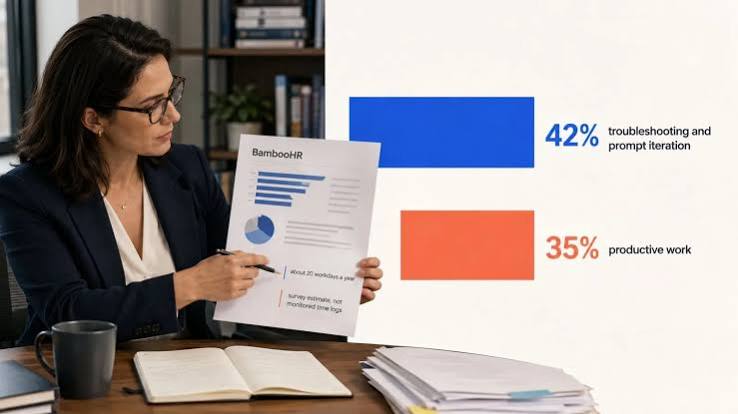
BambooHR’s new survey annualizes current daily AI troubleshooting into roughly 20 workdays. That is a useful measure of scale, but it is not a measured annual loss, a historical trend, or a prediction of what workers will lose in future years.

Culture
As generative systems make polished images, music and design cheaper, artists are rediscovering noise, grain, distortion, pixelation and physical error. The flaw is no longer something to remove. Increasingly, it is evidence that somebody was there.

Reported Feature
New Jersey can now sell you a $5 piece of Jon Bon Jovi nostalgia with a chance at $200,000. Matthew Broderick is selling an online casino as an act of rebellion. Gambling has stopped advertising only the wager. It is borrowing everything we already love.

Technology
A new survey finds workers are often using AI answers they do not fully trust, while most employers have not written verification rules. The mismatch is becoming a workplace system of its own: the machine produces the answer, the employee supplies the judgment, and accountability reappears the moment something goes wrong.

Technology
Leapora AI’s Taskeen is built around a strange new workplace problem: when polished output becomes easy to produce, a checkmark saying “done” may be the least interesting thing a manager needs to know.

Reported Feature
iScreeningRoom’s new AI can watch an unreleased film, predict how viewers will react, and recommend edits without a test audience seeing a frame. The technical pitch is efficiency. The cultural question is what happens when creators start making work for a simulation of us.

Reported Feature
BGC Group says its Fenics AI system autonomously handled a Swiss index-options trade from price discovery through execution. Financial markets have been automating for decades. The new question is what remains recognizably human when the intermediary joins the machines.
Reported Feature
Philadelphia-based Instinct Science is building Attending, a conversational clinical reference tool for veterinarians. The important question is not whether AI becomes the veterinarian, but what changes when professional expertise increasingly arrives through an AI interface.

Reported Feature
A survey of 2,000 U.S. workers found employees are nearly four times more likely to talk through work stress with an AI chatbot than to use employer-provided mental-health support. The interesting question is not whether AI has become a therapist. It is why the machine can feel easier to talk to than the organization causing the stress.

Reported Feature
A percentage can tell you that prose resembles a pattern. It cannot tell you where a sentence learned its timing, why a writer broke the rhythm on purpose, or whether the apparent polish is artificial at all.
Reported Feature
Princeton researchers found that leading AI systems can miss basic events in police body-camera footage. The larger problem is what happens when we begin delegating observation itself.
Technology
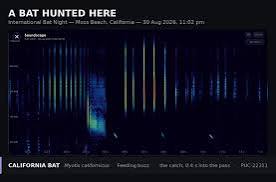
BirdWeather's new bat detector turns the nearly invisible nighttime traffic over a home into a stream of timestamps, species guesses and behavioral data - raising a bigger question about what happens when ordinary nature becomes continuously measurable.
Reported Feature
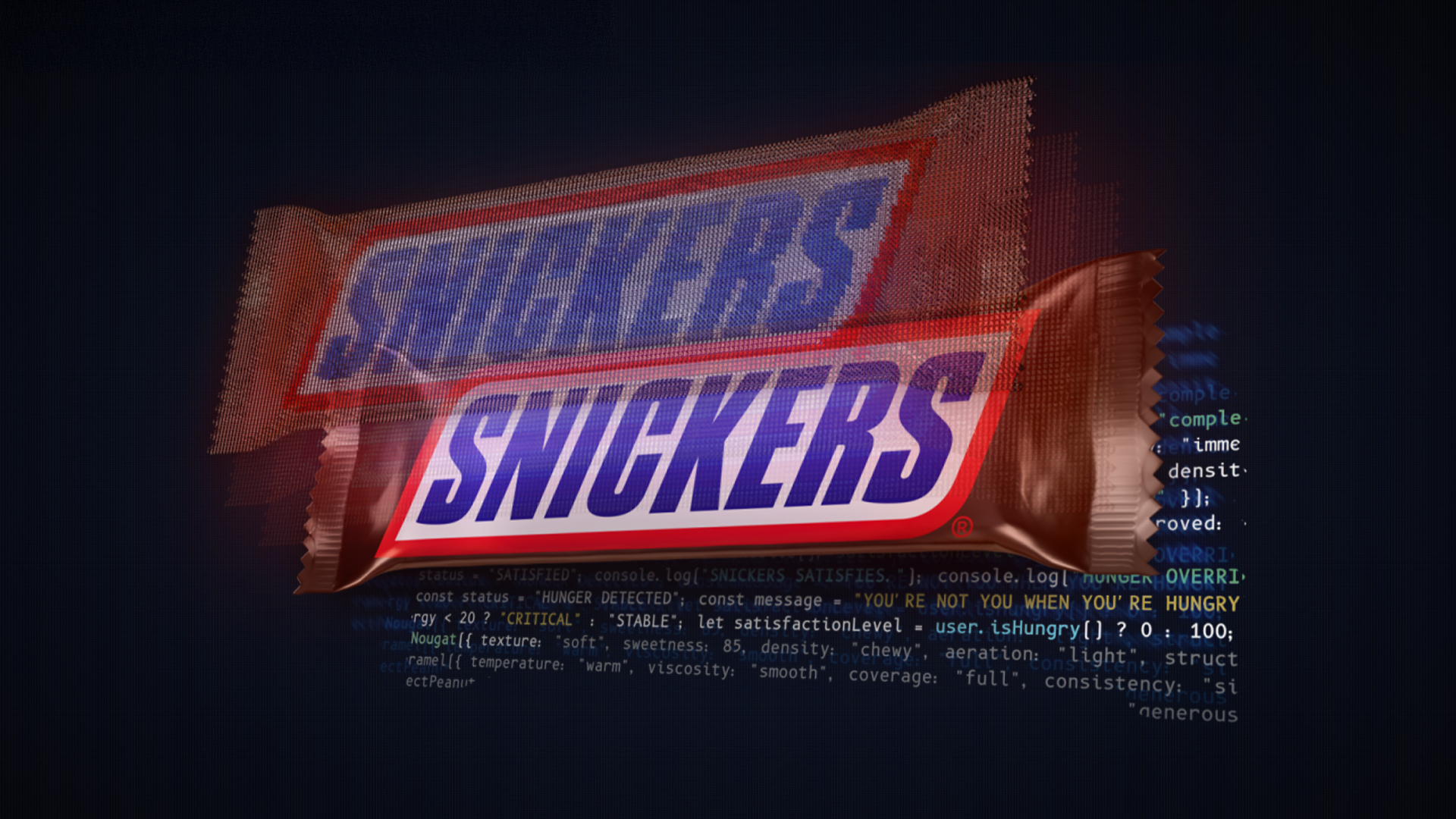
SNICKERS made a digital candy bar for malfunctioning AI. It is either a very good joke stretched slightly too far, or a slightly desperate idea rescued by one very good joke.

Reported Feature
A new Capgemini Research Institute and LIMRA survey finds strong interest in life insurance colliding with technical language, uncertainty and a purchase process that many consumers abandon. Generative AI may be emerging as the interpreter between people and an industry that still has trouble explaining itself.

Reported Feature
Muck Rack says Generative Pulse now uses millions of real consumer AI interactions to recommend the questions brands should monitor. For GEO, that is a shift from imagined prompt libraries toward observed audience behavior — and a glimpse of the measurement layer AI search has been missing.
Culture
Summation wants an always-on AI analyst to monitor the business, investigate changes, run recurring reviews and hand people the answer. It solves a real problem. It also raises a very 2026 question: how many layers of AI do we need before somebody has to supervise the supervisors?

Reported Feature
Cloudflare says automated traffic has overtaken human requests for HTML pages. The stranger question is what happens when machines increasingly create, read, rank, summarize, and act on content before a person ever sees it.

Reported Feature
NTIA has not decided to add artificial-intelligence questions to a federal household survey. But a new notice asks whether AI use at work and home, and Americans’ attitudes toward it, now belong in the government’s long-running measurement of everyday internet life.

Reported Feature
Pet wearables are crossing a line from measuring animals to narrating them. That could help us notice what we miss — or teach us to trust the dashboard over the animal standing in front of us.

Reported Feature
CyberHero launched a humanoid robot sports league in Riyadh with plans for an eight-city global circuit. The machines can punch, kick, fall and recover. The harder question is whether spectators will eventually care about them the way we care about athletes.

Reported Feature
Embark’s new Behavior Insights feature promises to connect 15 behavioral tendencies to a dog’s genetics and then build a year of training around them. The useful part may be understanding predisposition. The harder part is remembering that predisposition is not destiny.
Reported Feature
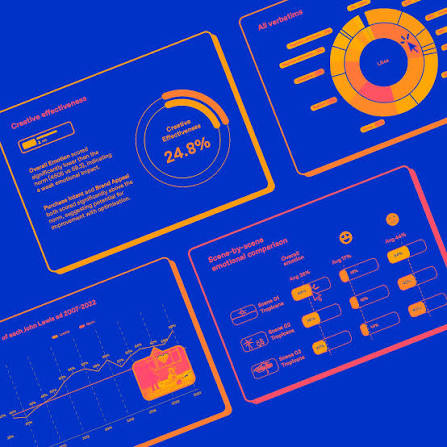
Zappi's latest industry study finds companies connecting more consumer data while growing less satisfied with insights — a paradox about judgment that AI speed cannot solve by itself.

Reported Feature
At Imola, five identical autonomous racecars made software the competitive difference — and forced a cultural question about what sport looks like when nobody is in the cockpit.

Reported Feature
From Teaneck, Cognizant is hiring graduates and inventing job titles for an AI-enabled workplace, Frontier Certified Engineers and Frontier Business Operators, before the labor market has settled language for what comes next.

Reported Feature
A new study did not find that AI has better manners. It found something stranger: individual people are surprisingly bad at estimating what everybody else thinks is appropriate, largely because we keep turning a messy social average into a confident right-or-wrong judgment.

Reported Feature
A new Eagle Hill Consulting survey finds AI embedded across core business functions while work design, management practices and workplace culture trail behind. The next phase of AI transformation may have less to do with buying software than with rebuilding the organization around what the software can now do.

Reported Feature
For most of human history, knowing a dog meant watching the dog. Connected collars are turning that relationship into a stream of location, activity and behavioral telemetry, and increasingly asking software to tell us what the animal means.

Reported Feature
A Princeton-linked workshop at one of machine learning's most important conferences is pushing a deceptively difficult idea: if generative AI operates inside language, art, context and meaning, then evaluating it cannot stop at whether the answer is technically correct.

Reported Feature
Fimo's new 'autonomous website' platform proposes a different future for publishing: AI agents that keep working after launch, while humans move from making every change to deciding which machine-proposed changes deserve to become real.

Reported Feature
A Sept. 7 survey says half of U.S. adults would call a romantic AI companion cheating. The harder question is whether betrayal still requires a second person who understands what is happening.

Culture
AI can make a street filmed in 1911 move like it was shot yesterday. It can color the coats, sharpen the faces, smooth the footsteps and manufacture the frames between them. The result may feel more real. That does not mean more of it is true.

Culture
Virtual heritage is moving beyond museum novelty. The same 3D scans used to monitor caves, ruins and conflict-damaged monuments are becoming public experiences, raising a strange new possibility: the digital version of a place may remain accessible long after the physical one cannot be.